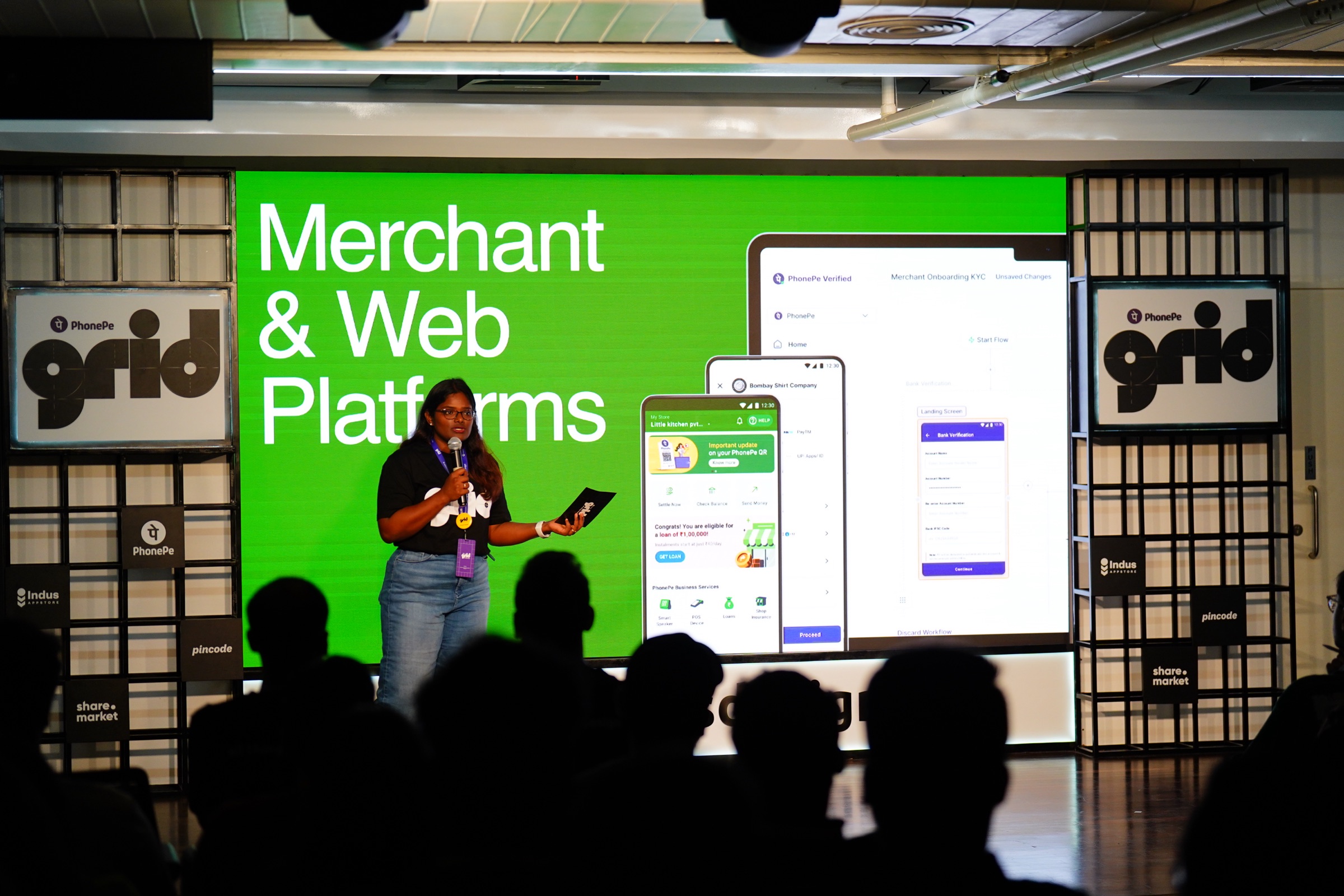

PhonePe is India’s leading digital payments platform, where 4.7 Cr+ businesses run their livelihoods. As Head of Design for the Merchant charter, I scaled design from a two-person task force into a nine-designer strategic engine.
I inherited a fragmented ecosystem of 11+ platforms run by a reactive two-person team. I grew the organization to nine designers and replaced undisciplined workflows with a rigorous project framework - embedding design upstream in the PRD phase, so our user flows became the definitive cross-functional source of truth.
We unified sprawling mobile and web platforms while anchoring the digital experience into physical payment hardware (SmartSpeaker 3.0) - transforming design from a visual bottleneck into a primary driver of corporate business strategy.

Pincode is a hyper-local shopping platform built on India’s decentralized ONDC network. I steered design through the messy 0-to-1 - from a single pilot to a multi-city marketplace.
Building on the unbundled ONDC protocol meant zero established patterns to lean on - a fragmented backend of disconnected store catalogs and unpredictable logistics. We translated that chaos into a seamless, high-trust hyper-local experience.
By shielding consumers from network complexity, we scaled from a single pilot to a multi-city marketplace - establishing the foundational design blueprint for decentralized e-commerce.

Moonraft (now UST) crafted digital experiences for global enterprises across four industries. I led UX and visual design for Standard Chartered, IDFC, Taj Hotels and Olam - delivering clarity inside massively complex, multi-stakeholder systems.
Moonraft was my master-class in context switching. Leading in an agency environment isn’t about delivering a single process - it’s about understanding the terrain of each complex system and delivering clarity within it.
The domains ranged from banking in Singapore and India to luxury hospitality and global commodity trade - each with its own regulators, stakeholders and definitions of “done”.

Lechal is the world’s first haptic navigation platform - smart footwear built for people with visual impairment. I architected the companion app and engineered its haptic vocabulary - mapping vibration into navigation.
Pioneering screenless navigation at Ducere meant inventing a sensory design paradigm with zero hardware-software benchmarks. I mapped precise vibration sequences onto smart footwear - translating spatial telemetry and real-time GPS into intuitive, subconscious touch cues.
Bridging digital interfaces and industrial engineering constraints, we turned a highly technical tracking system into a premium, world-first navigation platform for mainstream and assistive mobility.
No generic playbook. Terrain first.
Agency, 0-to-1 startup, and platform scale each demand a different kind of leadership. Read the ground before choosing the play.
Embed design at the PRD stage so user flows become the cross-functional source of truth - not a downstream veneer.
Build the system around each person’s strengths, and make different people productive together on messy problems.
Fragmented networks, protocols and hardware are our problem to absorb - the user should only ever feel trust.
The mental endurance to hit aggressive goals without ever trading away the quality of the work.
The path so far
National Institute of Design→Ducere (Lechal)→Moonraft (later UST)→PhonePe→Pincode→Head of Design, Merchant - PhonePe